Tuesday, April 1, 2014

Spirit Filled Challenge


At the close of the message on Sunday, I issued the “Be Filled With the Spirit” challenge. More than a challenge really, I issued the grandfather of all dares.  I triple-dog dared my church to take Paul’s command to be filled with the Spirit seriously, and actually do what he said to do.

Our study of Ephesians had brought us to Paul’s instruction in 5:18-21. You can hear the message here. In summary, the expectation Paul laid out was to set the excessiveness of worldly pursuits aside and to drink excessively from God’s Spirit. Now, I am extending the challenge to you.

Are you willing to take the dare? I triple-dog dare you!

Be Filled With the Spirit Challenge

Set aside something; choose things you enjoy in excess. We can enjoy God’s creation; don’t hear me saying anything different. But, we can have too much it. What we can’t have too much of is God. What we need more of is Jesus. What we can pursue with radical abandon is the Holy Spirit’s influence, leading, and empowering.

Between now and Easter do this and come back and tell me if it wasn’t worth it and isn’t how you want to spend the rest of your life…
  • Set aside your regular music, fill your mind with music with Christian lyrics and Gospel centered messages.
  • Spend time every day meditating on the message or the word of Christ.
  • Read every day from the Psalms
  • Get together with your family in Christ and talk to one another about it, sing the songs together, worshiping and leading one another to worship our great God.
  • Set aside time every day to consider what you have to be thankful for, and I am not just talking about the easy things. I am talking about the sanctifying and difficult things that lead you to greater dependence on Jesus. I am talking about the difficult removal of things that cause you to see God’s sovereign glory, as well as the easy things. I am talking about the things that remind you of what you actually deserve (condemnation, punishment, death), and what you have actually been given (acceptance, approval, life).
  • Turn your attention away from what you want selfishly and start considering the needs of others more important than your own; give yourself up for the people around you.
I am confident that, when we set aside the excessive life of the world and fill our lives with the things of God, we won’t be disappointed. He will do what only He can do, He will fill us, influence us, lead us, and empower us.

Let me start the conversation by letting a Christian brother speak to you with his powerful and poetic praise to Jesus our King. I have listened to this song a number of times, but today, as I meditated on the Gospel, it played and it was like I heard it for the first time. Listen to it, closely, don’t get lost in the music, the words are true and powerful, and the reason we have hope for our future. Jesus didn’t just come to suffer as our Savior, he came to establish His eternal throne, He is the King of Glory!


Psalms 24:1-10 (ESV)
1 The earth is the Lord’s and the fullness thereof, the world and those who dwell therein,
2 for he has founded it upon the seas and established it upon the rivers.
3 Who shall ascend the hill of the Lord? And who shall stand in his holy place?
4 He who has clean hands and a pure heart, who does not lift up his soul to what is false and does not swear deceitfully.
5 He will receive blessing from the Lord and righteousness from the God of his salvation.
6 Such is the generation of those who seek him, who seek the face of the God of Jacob. Selah
7 Lift up your heads, O gates! And be lifted up, O ancient doors, that the King of glory may come in.
8 Who is this King of glory? The Lord, strong and mighty, the Lord, mighty in battle!
9 Lift up your heads, O gates! And lift them up, O ancient doors, that the King of glory may come in.
10 Who is this King of glory? The Lord of hosts, he is the King of glory! Selah


Friday, March 7, 2014

Sunday Morning Missionary Part 10

Where Do We Go From Here

Sermons can be powerful and emotional in the moment they are preached. But their effectiveness can really only be seen in the days and weeks that follow. Certainly, God will use words to bring about immediate heart change, but that can truly only be discerned in time. So for Sunday Morning Missionaries, the response to our time together is just as important as the time together.

One of the most compelling stories in the New Testament occurs in Acts Chapter 2. In response to having met and spent time with the risen Lord, Peter and Jesus' other followers (about 120 of them) are gathering regularly to pray. At one point when they were together, the Holy Spirit descended on them, indwelt them, and empowered them. The Spirit's arrival drew so much attention that people from across Jerusalem gathered around the place Jesus' followers were meeting. For many of them, this would be the first day of their new life. What they witnessed and what they heard would have such a profound effect on them that the course of their lives would forever be altered.

Jesus' followers were proclaiming God's powerful works, but what made it most astonishing was that as they spoke, everyone that gathered around heard it in their own native language. Not only were they hearing about God's powerful and majestic works, they were witnessing it firsthand. Some of the people in the crowd tried to deny what they were seeing. They tried to say Jesus' followers were drunk. But, who ever heard of wine giving you the ability to speak clearly or coherently in multiple languages at the exact same time? This was obviously God's work.

From among Jesus' followers, Peter steps forward and in spite of the accusations preaches the first Gospel message. Fully inspired by the Holy Spirit, Peter proclaimed Jesus' eternal identity, His sacrificial death, and His resurrection. His message is easily summarized by Acts 2:36, "Let all of the house of Israel therefore know for certain that God has made him both Lord and Christ, this Jesus whom you crucified."

When Peter quit preaching, God didn't quit working. The Spirit used Peter's words to affect a deep response in those listening. The Scripture says, "When they heard Peter's words, they were cut to the heart, and asked, 'What shall we do.'" They wanted to know, how to respond to this truth that they had just come to understand. Peter's answer called them to a life marked by what they now believed about Jesus. We know their response was genuine, because as chapter 2 closes in verses 42-27, Luke writes of the devotion of these new believers.

As a preacher, I pray regularly for the Holy Spirit to anoint my words, and ask that they be inspired like Peter's words were inspired. I ask that He not quit working when I quit preaching. I pray that every person I preach to be cut to the heart and desperate to know how to respond.  I pray that those that attend our church picking and choosing what they want like they filtering through clothes on a department store rack are so radically affected by God’s truth and grace that they cannot be the same. I pray they are empowered to respond like those earliest believers in the Gospel message because they are so moved by God’s power and presence that they want to direct all of their life to bring glory and honor to the Creator who chose to be their Savior. I pray that even those who have grown and become Sunday Morning Missionaries are sent out as Everyday Missionaries.

The Sunday Morning Missionary came to church to worship by serving others and to model Gospel power so others might hear this great news. She comes to join with her family united in Christ and empowered by the Spirit to offer up authentic heartfelt worship to our awesome God while encouraging others to do the same. He came to sit under the teaching of God's authoritative and life changing Word, to hear from God, to be sanctified by God’s truth and exhorted by His grace. Together they now come to the moment that awaits us all when brought face to face with the great news of God’s work in Christ for us, "Where do I go from here? What do I do now?"

Like Peter and the entirety of the Scripture, my answer is to live in faith; trust Jesus and act accordingly.  Sunday Morning Missionaries long to know, what now, because they know they are about to be Sunday Afternoon Missionaries, Work Place Missionaries, and Neighborhood Missionaries. When Jesus said, “Go therefore and make disciples of all nations, baptizing them in the name of the Father and the Son and the Holy Spirit, teaching them to obey all that I have commanded you,” He was defining for us what the entirety of our lives is to look like, and how our worshipful response to His truth should look. Everywhere we go, everything we do, every circumstance living for opportunities to worship and glorify God by leading others to worship and glorify God.

Where do we go from here? We step into the next moments and circumstance of our life with this one singular motive, whatever you do, do all to the glory of God (1 Cor 10:31)” You see, Sunday morning isn’t the only time we are called to worship on mission. We worship by living out His mission in faithful, obedient, Gospel motivated response to His truth Sunday through Saturday, 24/7/365. 

Sunday Morning Missionary Part 9


Preach The Word

2 Timothy 4:1-3 (ESV)
1 I charge you in the presence of God and of Christ Jesus, who is to judge the living
and the dead, and by his appearing and his kingdom:
2 preach the word; be ready in season and out of season; reprove, rebuke,
and exhort, with complete patience and teaching.
3 For the time is coming when people will not endure sound teaching, but having
itching ears they will accumulate for themselves teachers to suit their own passions,

Participation in the worship gathering doesn’t end with the music. Paul’s instruction doesn’t just have implications for the preacher, but also those who receive the preaching. Preaching sound doctrine must be heard to be effective. Without hearers of the word the preacher cannot truly preach. But together, we glorify God as preachers proclaim God’s word and hearers listen to be reproved, rebuked and exhorted by sound doctrine.

To reprove is to convict someone of what they have done wrong. When the scribes and Pharisees brought the woman caught in adultery before Jesus (John 8:1-11), His response reproved or convicted them of their own sin. “’He that is without sin among you, let him first cast a stone at her.’ And again He stooped down, and wrote on the ground. And they which heard it, being convicted by their own conscience, went out one by one, beginning with the eldest, even unto the last” (John 8:7-8a ESV). By the preaching of God’s word, the hearer should be able to identify their sin and therefore recognize their need of a Savior.

The word translated rebuke means to admonish strongly, with urgency, and authority. Jesus rebuked demons (Mark 1:25) when He cast them out of people, a storm when He commanded it to stop (Mar 4:39), and even a follower like Peter when necessary (Mar 8:33). The intent in Paul’s command to Timothy is to not only convince people of their sins, but to command them to stop their rebellion.

By themselves, these first two might come across as harsh and cruel, but preaching is not complete without exhortation. To exhort is to encourage or to spur on. Just as John the Baptist did when he preached the Gospel. While reproving and rebuking may highlight our failures, exhorting encourages us to recognize the grace of God in Jesus Christ. It reminds us that our righteousness, our holiness, our forgiveness, and salvation are secure in Him, and encourages us to pursue Him more fully.

When the word has been preached those that have heard should have a larger and higher view of God. They should have a fuller view of His majesty and holiness, and a greater respect for His grace and mercy; thereby being made ready to live all of life in response to His great work on their behalf.

There is no room for substitutes. What we don’t need is more self-help, motivational, find the power within yourself ear-ticklers. Jesus told His disciples, “The one who hears you hears me” (Luke 16:10). Martin Luther held that preachers were the “mouthpiece of God. He said, “The Creator of heaven and earth speaks with you through his preachers. John Calvin taught, “He (God) deigns to consecrate the mouths and tongues of men to His service, making His own voice to be heard in them. Henry Bullinger wrote in the Second Helvetic Confession, “Preaching the word of God is the Word of God.”

What responsibility this adds to the preacher and his own preparation. Not just in his study and understanding of the Scriptures, but also in his own life, that as he approaches the pulpit he is ready by God’s grace to proclaim God’s word that God’s people might hear God’s voice. But, make no mistake; the responsibility does not just fall to the preacher, but also to the hearer. For how can one preach to another who is so distracted by the worries of life that she can’t pay attention, or whose pursuit of happiness has left him so tired that he cannot stay awake, or who quenches the Spirit and denies the truth.


Sunday Morning Missionaries don’t quit worshipping because they quit singing. They continue worshipping as they meet Jesus in the Word. They bow their hearts in humble adoration as they are confronted with the truth and restored by His grace. Sunday Morning Missionaries worship as they confess their sin and rely on the forgiveness of their Savior. Sunday Morning Missionaries worship as they eagerly submit themselves to God’s word that they might be renewed and made ready to live in a manner worthy of their calling. 

Friday, February 7, 2014

Sunday Morning Missionary Part 8

Our Time Together

If the average church worship gathering lasts 90 minutes (that’s actually on the long side) that translates to less than 1% of our time each week. Assuming we never miss a week over the course of a year, we will have spent 78 of our 8760 hours worshipping together with other Christians. Of course, this doesn’t account for other weekly Bible studies, or missional projects that we gather for. In addition, there is any number of ways that we can worship all week long, even when we are alone.  But, this does emphasize just how limited our time together is, and how important it is that we not take it for granted or waste it.

As many times as the church gathers throughout the week or a person worships privately, most of these will not have such intentional focus as our Sunday morning gathering. When we gather in homes over meals or Bible study, fellowship and discipleship are most often the modes of worship. Movie nights for school kids, feeding the homeless, even evangelizing the lost all provide great opportunity to serve and honor God. But, there are few other times the church gathers with such an intentional vertical focus together. At The Way, we take this seriously.

Not only are we being selective about the songs we sing, but we are also being very particular about how we use our time together. The methodology has changed as the church has changed, but we are no less intentional today than we have ever been about our time in worship. As we strive to organize each worship gathering, we strive to fill it with Gospel proclamation and opportunity for each person to respond to God’s life giving grace.

This perspective informs everything we do.  There is no moment of our time together, that your leaders have not considered in light of our first priority. For example…


  •        We are a Gospel centered church. That means we exist because of the Gospel and are motivated by the Gospel. So, as we gather, we seek to proclaim God’s message of grace and life (the Gospel) over and over. The songs we sing proclaim the Gospel. The sermons preached proclaim the Gospel. Even the liturgy we follow, (A.C.T.S.) encourages us to respond faithfully; as we ADORE the Creator that became our Savior, CONFESS our sin and need of His salvation, THANK Him for the work He did on our behalf, and offer up prayers of SUPPLICATION (requests for His continued work) on each other’s behalf.
  •          We haven’t always taken Communion every week. Since we have, our time together has become that much more precious. We strive to proclaim the Gospel in our music and in our teaching as we seek to emphasize God’s unmerited good work on our behalf through Jesus’ sacrifice. But there are few words that paint a picture as clear as the observance of Communion. Each week as the sermon closes, our time together comes to the pinnacle when we are reminded what Jesus did so that God the Father could offer us so much so freely.
  •          Another example, we want families to be able to worship together, and we want parents to be able to model corporate worship for their children. So, we love that parents keep their children through the first part of the song service. However, we also recognize the importance of each person being able to respond without distraction. So, we sing more than one song after the preaching and encourage parents to let us serve them by keeping their children in KidsWay.
  •          One last example is passing offering plates during our time of response. Previously we would just accept tithes and offerings in the offering box at the back of the sanctuary. But, by actually passing plates during this specific time in the service, we emphasize our giving as an act of worship and not something that is just done without thought. Rather, it is an intentional act of worship in honor of the God who saved and to facilitate His mission in the world. You may give online but, passing that plate to the person beside you gives you opportunity that what you give is just as much an act of worship as those putting cash or checks in the plate.

Intentional plans are imperative in order for us to use our limited time as wisely as possible, but they won’t accomplish anything without intentional participation.

Your Part To Play

Do you remember how A.W. Tozer compared Christian worship to piano’s that are all being tuned to the same tuning fork? Regardless of the songs we choose or the detailed attention given to each moment of our time together, one final component has to be fit into place, your intentional participation. Showing up and checking a box on our list of tasks for the day, doesn’t do it. Following the crowd around you, standing when they stand, sitting when they sit, half-heartedly singing along, and even begrudgingly taking Communion, or putting money in an offering plate out of guilt aren’t the same as intentional participation. 
God is going to be glorified, His name will be praised, regardless of what we do. There will come a point in which every, not some, but every knee will bow and tongue confess that Jesus is Lord. But, until that day comes, Sunday Morning Missionaries recognize their opportunity to willfully respond to God in worship because of the Gospel.

Sunday Morning Missionaries intentionally take part. They celebrate together in worship, they give generously, and they observe Communion gratefully, because they know this is the mission. Sunday Morning Missionaries know that God gave us the Gospel to reconcile our relationship to Him so that we could receive good gifts from Him and offer real honest worship to Him. Evangelism exists to facilitate worship. Discipleship exists to facilitate worship. Ministry exists to facilitate worship. While these are modes of worship in themselves, the Sunday Morning Missionaries know that to take part in God’s mission, we must also at times intentionally set aside time to worship Him together. As we do this God is gloried, we receive His blessings, and those among us who don’t know Him are shown Him.

This Sunday morning whether you sing as loud as the person next to you, or whether or not you raise your hands or clap, let me encourage you to live for this moment in the mission. Come ready, come willing, come with specific intention to direct your body, mind, heart, and soul to honor God in the way He deserves. After all, this is what He created and saved you for, His glory and your good.

Friday, January 17, 2014

Sunday Morning Missionary Part 7

Sing, Sing, Sing 

Ephesians 5:18-19 (ESV)
18 And do not get drunk with wine, for that is debauchery, but be filled with the Spirit,
19 addressing one another in psalms and hymns and spiritual songs, singing and
making melody to the Lord with your heart,

Something special happens when we sing in worship together, maybe even more special than any other moment we share as Christians. Maybe that’s why God reserved more pages in His Scriptures for a book full of songs than anything else. In the book The Pursuit of God A.W. Tozer wrote,

“Has it ever occurred to you that one hundred pianos all tuned to the same fork are automatically tuned to each other? They are of one accord by being tuned, not to each other, but to another standard to which each one must individually bow. So one hundred worshipers met together, each one looking away to Christ, are in heart nearer to each other than they could possibly be, were they to become 'unity' conscious and turn their eyes away from God to strive for closer fellowship.”
As we join in singing together we are being tuned to the same fork. Our attention is being drawn away from ourselves and being united with those around us to our tuning fork, Jesus Christ. In these moments of song we are praying prayers of adoration and praise, confessing our sin and our need for Him, proclaiming our faith and the Gospel to each other, and encouraging one another to believe it.

When we sing together in worship, Jesus is our tuning fork and He unites us around Himself. Does this mean we should only sing together, or that singing is the only way we can be unified in worship together? Absolutely not! Does it mean that we should skip prayer and preaching to sing? Of course not! But it should highlight how important the songs we choose and these moments together are, and how important it is for each of us to participate.


The Songs We Sing
Singing together in worship is a distinctly Christian activity. You can sing along with others to your favorite song on “secular” radio or at a “secular” concert. But even then, those songs cause you to consider your own life and your own dreams and desires.  But, when Gospel centered, Scripturally saturated, theologically accurate, and Jesus exalting songs are sung by a people who have been made spiritually alive together by the Holy Spirit something transcendent takes place.

It is unfortunate that in today’s Christian culture, our corporate singing and song choice has been riddled with such controversy and is now dominated by discussions of style and personal preference. Music has caused such division that local churches actually split over it. It got so bad that the name “Worship Wars” was coined. In an article Gordon MacDonald wrote in 2002 he observed, “For many young people choosing a church, worship leaders have become a more important factor than preachers. Mediocre preaching may be tolerated, but an inept worship leader can sink things fast.” While culturally speaking, churches, and Christians for that matter, are in a better place, I can tell you, as one who has had numerous conversations with people looking for churches, musical style or performance and personal preference are still being idolized.

At The Way, we don’t ignore musical style all together, and it is not that we don’t care if a song is sing-able. In the world we live, these have to be considered. But, musical style will never be the highest priority as we choose songs or arrange worship gatherings. If we are defined by our style more than the content, we have missed the point. We are not striving to simply provide a cool experience, but are striving to tune each heart to our Lord and Savior Jesus Christ. We a
re confident that when we do, this is the only experience that will provide any level of satisfaction. So our songs are chosen and arranged intentionally each week with that in mind.

Before we consider style, tempo, or even our own personal preferences for a song we sing together it must meet 4 criteria.
  1.  Gospel –Centered – the Gospel is our only hope and the motive for our living. On his blog Joe Thorn puts it like this, “to be gospel-centered means that that the gospel - and Jesus himself - is our greatest hope and boast, our deepest longing and joy, and our most passionate song and message. It means that the gospel is what defines us as Christians, unites us as brothers and sisters, changes us as sinner/saints and sends us as God's people on mission. When we are gospel-centered the gospel is exalted above every other good thing in our lives and triumphs over every bad thing set against it.”
  2.  Theologically Accurate – we aren’t opposed to artistic language and metaphor. But, if a song blatantly opposes what the Scripture teaches about God, His identity, or His work of redemption and restoration, we will not sing it no matter how catchy or popular it is. Just because 99.5 Hit FM or 88.3 The Wind will play it on their radio station, doesn’t mean we should sing it in the church.
  3.  Scripturally Saturated – This doesn’t mean that we only sing scripture set to song. But, the doctrines of God’s word should be readily apparent in them. For example, one of my favorite songs that we have sung is All I Have Is Christ by Sovereign Grace Music. Doesn’t just define God and His work, but also clearly agrees with the biblical perspectives of who we were apart from Jesus.
  4.  Jesus Exalting – There is a perspective that if we sing songs that focus on us personally, we are not exalting Jesus. But, when these first three criteria have been met, there is great joy and encouragement as we think about the implications of the Gospel in our lives. The psalms are full of these expressions of God’s work on a person’s behalf. So, as we sing How He Loves, we can only exalt ourselves as those loved by God when we exalt Him for His work for us through Jesus.


What we are singing together matters and Sunday Morning Missionaries come ready and longing to sing and tune our hearts to Him in song together. In fact, there aren’t many things that would keep us from it. 

Sunday Morning Missionary Part 6


Big Church

To this point, our focus has been directed to those moments of the Sunday morning worship gathering before the service actually begins. Hopefully, you sensed how important it is that we each strive to be very intentional in our efforts to love one another, express hospitality to visitors, and serve one another as we gather. But as important as those moments are before the service, the Sunday morning gathering is more than just another opportunity for the church members to spend time together. We set this time aside to specifically worship God together through unified singing, the preaching of His Word, and the observance of His sacraments. Just as each of us have a significant part to play before the service; we each play an important part throughout the service as well.

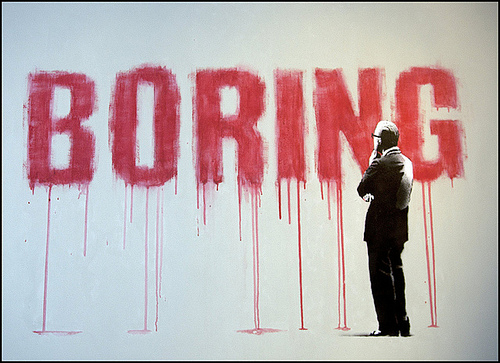
I remember as a child not wanting to go to “big” church.  I don’t know if anyone else ever referred to the church service this way. But we called it “big” church because all the adults or big people went there, and kids under a certain age would do something else. My lack of desire to go to “big” church didn’t sway my mother’s mind though. I definitely sat through my fair share of Sunday morning church services. It seemed so boring, and it was so difficult to sit still for so long. It wasn’t the singing I had a problem with, I actually enjoyed that. During the singing we got to move around and we didn’t have to be so quiet. But once the preacher took the stage a most intense internal struggle to sit still began.

In our over-stimulated world, it’s not just children that struggle with this anymore. Church leaders everywhere are doing all kinds of crazy things to “spice” up their services to make them more engaging. This is not always a bad thing, there is a reason some churches have been referred to as “the frozen chosen.” There should be a sense of joy and celebration as we gather. But, it isn’t hard to go too far in the other direction and allow our antics to take center stage. @celebritypastor recently posted, “My usher team got all huffy when I asked them to wear reindeer costumes today. Their hearts are two sizes too small.” When the most memorable moment in a worship service is not an encounter with the living God, but rather the cool lighting effects, or the pastor swinging in on a rope, or ushers dressed like reindeer, a line has been crossed.

Methodology and the use of technology are never the ultimate answer to bringing life to the church service. We’ll never get past our boredom in church, until we quit going for a reason other than seeking Jesus. I was in my late twenties the first time I went to church because I wanted to go. But once I learned that the service wasn’t a spectator sport, everything changed. When I sought Jesus, good songs became great songs, good preaching became great preaching, church services went from being a duty to a delight. When I began seeking Jesus’ face, the style of music didn’t matter, I put less pressure on the preacher to perform, and I always left fulfilled knowing I had been with God’s people in God’s presence.

Remember, what Paul wrote to the Corinthians, whatever we do should be done to His glory (1 Corinthians 10:31). It should be done with Him as the central motivating factor. Everything else is just a simple methodology that will bring no fulfillment or bear any spiritual fruit. It may feel good for the moment, but If Jesus and His Father’s glory are not the main goal of the service those good feelings fade and leave us empty handed.

At The Way, we are not often polished with a lot of frills. But, the leadership strives to ensure Jesus is clearly exalted, and His Gospel message is proclaimed repeatedly each time we are together. Each song is chosen and placed in order intentionally. The sermons are intended to not only explain the Scripture, but also to help us see how the Gospel is the answer. Each week we observe communion, not because it’s a cool tradition, but because it emphasizes even our response is in light of the finished work of Jesus on the cross and the hope of His resurrection. But, no matter how hard the church leadership works, there is still a necessity for the members to come as a people on mission. To pull off life-giving, heart-changing worship gatherings takes us all of us doing our part.

For the Sunday Morning Missionary the worship gathering is not just another stop on the weekly itinerary. Sunday Morning Missionaries come to church with their hearts prepared and ready to worship Jesus together. Sunday Morning Missionaries don’t passively hear the sermon, but listen intently for God’s voice from His Word. Sunday Morning Missionaries come seeking Jesus because they know nothing else satisfies. Sunday Morning Missionaries come knowing that this is one of God’s blessings that equip them to be missionaries Monday through Friday.